Faith

To Become A Better Muslim

To Become A Better Muslim 1600 1061 Nadir Keval

Life is a journey. Sounds cliche, but it’s true. The reality of the matter is that we all go through our ups and downs, and sometimes feel as though the world is going to break us because we become so attached to the worldly things. I know the feeling. I’ve been there myself. I’ve battled with certain things in my own ways, and it’s been a fight against Shaitaan in trying to overcome. But that’s the thing: Shaitaan is miserable, and as we know, misery loves company. So, he tries his best to pull us away from Islam, whispering into our hearts inspiration towards moving towards what displeases Allah. But, it is our weakness in our commitment and submission to Allah that makes us an easy target for Shaitaan.

So, I thought I’d share some of the things that have helped me in becoming a better Muslim. If you have any more tips to share, please leave them in the comments below. I really think we have so many ways to become better, and that we ALWAYS have that option, so let’s work together on doing so.

Heaven and Hell

As I began my journey of Islam, I focused around building an understanding of Jannah (Heaven) and Jahannam (Hell). The reason I did this was because I wanted to better understand these concepts in Islam. I know there’s more to them that what I can imagine. So, I started studying the things mentioned in the Quran and Sunnah about these two places. The reason for this was because I wanted to establish a love for Jannah and a hatred for Jahannam. By doing so, I was able to (I still work on this everyday) find an inclination towards what will get me to Jannah and what will keep me from Jahannam.

Loving the Prophet (SAW)

As does a son towards his father, I began to learn about the Prophet (SAW) as much as I could. The reason was because I knew that he was sent as an example for us, and so, in order for me to emulate him as best as I could, I needed to know him to the greatest level of detail I could. This is something I still work on today, and to be honest, I think I will be working on this for the rest of my life. This isn’t because it’s difficult or confusing or anything like that, but because this man was so incredible and had so much about him to love, that it’s difficult to appreciate him (SAW) in just one lifetime. I pray that Allah gives me and all of you the opportunity to grow to know the Prophet (SAW) as well as you can, and that He instills an incredible love for him (SAW) in our hearts. Ameen!

Focusing On Salah

Salah (prayer) is something we know to be one of the biggest aspects of Islam. But, as you may have noticed by know through my posts, making something big in my mind only stresses me out and pushes me away from it. So, when it came to Salah, I began with the basics. I started just praying the Fard (obligatory) aspects of each prayer, and prayed as many of them as I could in a day. Sometimes, I missed some, sometimes I was so on par that I felt that I had finally overcome and was ready to add more. As time progressed, I strengthened the focus and concentration during those prayers, and eventually was so in love with the peace and calm that came with Salah that I began learning about the extra/voluntary prayers prescribed by the Prophet (SAW), and started performing those. It’s all about taking things one step at a time. And remember, it’s quality over quantity, BUT that you should constantly be working towards fulfilling as many of the commands of Allah as you can. As I told my friend the other day, “It’s about being content with where Allah’s put you in your life, but never being satisfied. This way, you’re always trying to become better, and trying to get more reward and love from Allah.”

Enjoying The Little Things

There are so many little things we can do, and make a part of our lives in order to get closer to Allah, and closer to living like the Prophet (SAW). Doing these things increases our rewards from Allah, and are so simple to do that you really have nothing to lose while doing them. Some examples of this include:

  • The Prophet (SAW) used to touch his heels together during Sujood (prostration) during Salah. Try emulating that when you pray.
  • When he (SAW) would yawn, he would either cover his mouth with his right palm, or with his left hand by making a fist and using the top of the fist where the thumb and other fingers shape a circle, or with the back of his left hand
  • Simply smiling!

These are just some of the many examples I’ve read about. But you see how simple they are, and how doing those things can add to the reward?

Being Grateful

There are so many ways in which we can become better Muslims, and for that, we should truly be grateful. The reality is that it could be one simple deed that tips the scales in our favour when we are judged by Allah on the Day of Judgement, so we should be responsible and take whatever steps we can to add to those good deeds. Remember this very important fact: this life is temporary, and the Hereafter is eternal. So, it makes more sense to work hard towards happiness in something that will never end, compared to something that will end eventually. Focus on seeking happiness in the Hereafter, and watch how no matter what happens to you in this life, you will find reasons after reasons to be happy.

The Advice That Changed My Life

The Advice That Changed My Life 1600 1000 Nadir Keval

Last night, I was almost brought to tears from a discussion I had with a brother of mine about the matters of Deen, the example of the Prophet (SAW), and how important it is for us to remember Allah and His Messenger (SAW) in everything we do. He said one thing that broke it all down for me, and this is the advice that changed my life completely, Alhamdulillah. He said:

“Ask yourself, what would the Prophet (SAW) do or advise?”

I’ve heard this before. I’ve even advised others with these same words. I’ve thought that all this time, I’ve been trying to apply it to my life (and perhaps I have to some degree), but for some reason, it hit me harder this time than it ever has before. My brother reminded me that the nature of the Prophet (SAW) is so extraordinary that no one has or ever will amount to what he was like, but that it’s on us to try our best to be like him and learn from him. Many today will make excuses that his ways and his nature wouldn’t work in today’s world and society because things are different, but I believe that is because they are afraid of truly living by his example in fear of what others will think. I’ll be honest, often, that has held me back as well, whether I recognized it or not.

Common Sense

We may think to ourselves that using common sense, we can figure out the answers to how we should act. But the problem with that is that we are biased by our emotions, our fears, our desires, and the opinions and expectations of others.

When one truly submits to and believes in Allah, “common sense” becomes that which coincides with the teachings of Islam. Our opinions and things like that should be established based off of the understanding of the teachings of the Quran and Sunnah, and should not be based off of our own desires, thoughts, or anything of that sort. That doesn’t mean that we are robots that blindly follow our faith. We know that Allah does not obligate us in religion (Quran 2:256), but that is because there is no sense of obligation when one truly submits to Him, believes in Him, and trust Him unconditionally. We know clearly that Allah has said in the Quran:

“It is not for a believer, man or woman, when Allah and His Messenger (SAW) have decreed a matter that they should have any option in their decision. And whoever disobeys Allah and His Messenger (SAW), he has indeed strayed into a plain error.” – Quran (33:36)

With that said, we recognize that there are certain things that Allah and His Messenger (SAW) have commanded that we must obey, without question.

Then, there is the example of the Prophet (SAW). His example is one that, I can say from experience, is far better for us to follow than the example of anyone else. Every time that I have done something because I knew it was what he (SAW) would do, even if I were uncomfortable or hesitant of it, I would see myself being successful, Alhamdulillah. Every time I would not follow his example out of fear, be it of failure or of being ridiculed, or for any other reason, I would find myself struggling even more than I did before trying to deal with situation I was in. The Prophet (SAW) is truly the greatest example, and that is known across the globe, throughout all of history, amongst Muslims and non-Muslims alike.

“…I became more than ever convinced that it was not the sword that won a place for Islam in those days in the scheme of life. It was the rigid simplicity, the utter self-effacement of the prophet, the scrupulous regard for his pledges, his intense devotion to his friends and followers, his intrepidity, his fearlessness, his absolute trust in God and his own mission. These, and not the sword carried everything before them and surmounted every trouble.” – Mahatma K. Ghandi, YOUNG INDIA, 1924

But, Times Have Changed…

“And We have not sent you [O Muhammad (SAW)] except as a giver of glad tidings and a warner to all mankind, but most of men know not.” – Quran (34:28)

This is just one of the many examples in the Quran that express the Prophet (SAW) being sent for all of mankind, be it as a warner, a messenger, and example, and more. That means, he was sent for those before us, after us, and during our time. It is a truth that we should learn to accept, because only at that point can we truly say that we have submitted to the command of Allah.

Society has changed, people have changed, and practically everything else has changed. But, one thing that we know has not changed is the Quran and the fact that the Prophet (SAW) is our greatest example. He was a man who was as strong as a lion, with the heart of a bird, in that he would always remain calm, and it would be rare to see him get upset despite the hardships, ridicule, insults, torture, and more that he got from those who opposed him. But, when he needed to be firm and strong, he would be so, within the bounds of Islam, wisdom, and justice. In the world we live in today, it’s thought that the strongest man is the one who can defeat the other with harshness, and sometimes, deception. But, the most victorious and successful of men in history was the Prophet (SAW); harshness and deception was just not in his nature. So, success is clearly in following the Prophet (SAW)’s example, by being kind, understanding, patient, and wise. Remember to be confident in his ways, as this will give you the motivation, conviction, and courage to continue on the path of Allah, insha Allah.

The Greatest Example, The Greatest Advice

We, as Muslims, and even non-Muslims, have been blessed to have an example like that of the Prophet (SAW) in our history. Make an effort to always ask yourself, “What would the Prophet (SAW) do or advise?” when you are about to act on something, be it based on emotion, a major decision, or anything else. Following his example is a sure way to success, and even if others around you may become displeased, remember that Allah has commanded that we follow the example of the Prophet (SAW) in order to be successful. I will end this post with a simple reminder from the Prophet (SAW) that is incredible in giving us what we need to survive and be happy in this life and the Hereafter. But, remember, that its acceptance requires that we live up to the name Muslim by truly submitting to the will of Allah.

It has been narrated from Ibn ‘Abbas (RA) that the Messenger of Allah (S) said: “One who keeps his hopes solely upon Allah, He will be sufficient for that person in all affairs (of his life); one who keeps his hopes on the material world, Allah will leave him (with the world); one who wishes to reach his goals through disobeying Allah will be the furthest away from that which he wishes (to achieve) and will be the closest to difficulties; one who seeks to please the people through the disobedience of Allah, He will change the pleasure (of the people) towards him to be his disgrace (amongst the people).

One who seeks to please the people while earning the displeasure of Allah, Allah will appoint those people to be above him (to rule him); one who seeks to please Allah while making others displeased with him (through not obeying them), Allah will be sufficient for him from the evil of the people; one who acts properly with that which is between him and Allah, Allah will make sufficient that which is between him and the people; one who makes right that which he performs in secret, Allah will correct that which he performs in the open. Allah will make sufficient the affair of the one who works for his next life in all of his affairs of this world.”

Go Easy On Yourself

Go Easy On Yourself 1024 768 Nadir Keval

I always worry that I don’t do enough, and that I’m filled with sin because of my weaknesses. I try to keep in mind that Allah may be putting me through this circling of sin, so that I can grow stronger in Imaan (faith) and can turn back to Him. I often think about how I’ve asked Him to increase my Imaan and bless me with certain things, and realize that these struggles, be it with family, friends, health, love/marriage, Deen, work, education, etc. could, in fact, be part of Allah answering my Dua. Allah increased the Imaan of Ibrahim (AS) by putting him through tests and struggles, and Ibrahim (AS) was amongst the most beloved and most faithful of Allah’s creation. So, how can I expect to get things I ask for without having to work for it, especially if what I ask for is so high in value to me?

Welcome to my mind. That is an example of some of the thoughts that flood my mind from time to time when my Imaan is all over the place, and I’m struggling to get a grasp on things. We all experience this roller coaster of faith, where things are great at one point and we feel incredibly close to Allah, and then not too long after, we find ourselves sinning, stressing over things, and feeling a sense of uncertainty and a lack of clarity. Upon reflection, I found that the greatest reality I must come to terms with is that this is normal and that Allah has a reason for it all.

Allah tests us in our strengths to make us stronger, and tests us in our weaknesses to turn them into strengths. We all have them. But with an optimistic mindset, we can find peace in knowing that this is all part of Allah’s plan. If people often compliment you on your patience, your appearance, your talents, or anything else, remember that you are being tested. Arrogance is a sneaky enemy, so it’s important to be careful as to not fall into its trap. Remember Allah and thank Him when someone compliments you. The same goes when someone disrespects or insults you. Arrogance and other emotions (anger, frustration, etc.) can seep in from those kinds of experiences. Then too, remember Allah and thank Him for all He has given you, and reflect on what the Prophet (SAW) would have done in a similar situation.

“O Allah, You know me more than myself, and I know myself more than these people who praise me. Make me better than what they think of me, and forgive those sins of mine of which they have no knowledge, and do not hold me responsible for what they say.” – Abu Bakr Siddique (RA)

The beautiful thing is that often, we will find ourselves being tested by Allah in the matters that we would otherwise feel confident in. For example, a patient person will be tested in their patience. They will be tested in seeing how long they can remain strong in their trust and reliance upon Allah when their Dua take longer to be accepted. In the same (but perhaps more obvious) way, Allah tests the impatient person with patience, not to see if they can be patient, but to give them the opportunity to develop into becoming patient.

The truth is, nothing worth having comes easy, except if Allah wills. Everything comes with its opportunities to grow closer to Allah, and to pass a test from Him. If something you pray for is granted to you easily, then it comes with a test attached, to see if you will be grateful and will remember Him. But in most cases, we have to work incredibly hard, and sometimes have to face major struggles to achieve our goals. When we want something, we often want the best of what we seek. When you pursue marriage, you want a spouse that will be best suited to you and your nature, and such that they will bring you closer to Allah, will keep you happy, supported, loved, cared for, and protected, and with whom you can one day reach Jannah. When you pursue a career, you want to be the best you can be and reach the highest ranks in your career goals. When you want to get in shape, you want to be in the best levels of health and fitness you can be. The examples go on, and not all of them apply to everyone, but the point is that these things take time, effort, patience, trust in Allah, reliance on Allah, and an unrelenting amount of Dua. I remember once hearing a lecture where the speaker said:

“Make Dua like a child asking his parents for his favourite candy – he won’t stop asking until he gets it. Do the same with your dua, keep asking until you get it.” – Sh. Kamal el Mekki

Some hear that and think, “What if what I’m asking for isn’t right for me? What if Allah wants something else for me?” If that were the case, Allah would have removed that matter from your mind and heart. He would have replaced it with something better for you. Allah loves us, and He knows what is best for us, and so, if we ask Him to guide us and to make things easier, in order to pursue what will be beneficial for us in this life and the Next, then that is exactly what Allah will give us, insha Allah.

I’m not sure if any of you have done this “trust exercise” back in school, but there was this activity where a person would fall backwards, completely trusting that their friend behind them will catch them. It was tough for those who were partnered up with someone they didn’t know. But, if they had a friend as a partner, it was easier, because they felt the person cared enough about them to not let them get hurt. We know so much about Allah, including the love, care, and support He has for us. We know that there is no one that we can depend on more than Him. So, we need to now trust Him to catch us when we fall, to give us the strength to get through our struggles, to respect and accept that He puts us through situations and struggles to make us stronger, and that He instills thoughts and desires (the halal ones…the haram ones are Shaitaan’s whispers, so watch out for those!) into our hearts and minds to give us chances to get closer to Him.

Tonight, as you slide into bed, reflect on all that you are facing in life, all the blessings you have, and the things He has instilled in your heart. Act on making changes to pursue betterment in this life and the Next by remembering Him, thanking Him, and taking those leaps of faith towards the things He has instilled in your heart and mind. Remember to not beat yourself up over your sins, but to rather make positive changes in your life towards growing and becoming a better version of yourself.

“No amount of guilt can change the past, and no amount of worrying can change the future. Go easy on yourself, for the outcome of all affairs is determined by Allah’s decree. If something is meant to go elsewhere, it will never come your way, but if it is yours by destiny, from it you cannot flee.” – Umar Ibn Al-Khattaab (RA)

May Allah grant you all continued guidance, patience, ease, and success, as you take on the tests and struggles of this world, and may He make your desires and thoughts sync with what pleases Him, and your displeasures and dislikes sync with what displeases Him. Ameen!

The Day of Arafah – My Personal Story

The Day of Arafah – My Personal Story 3504 2336 Nadir Keval

It was almost 26 years ago. My parents had been married for four years, and after trying to have children, the doctors told them it would be impossible for them to conceive. They were devastated. They didn’t know what to do. They were feeling hopeless.

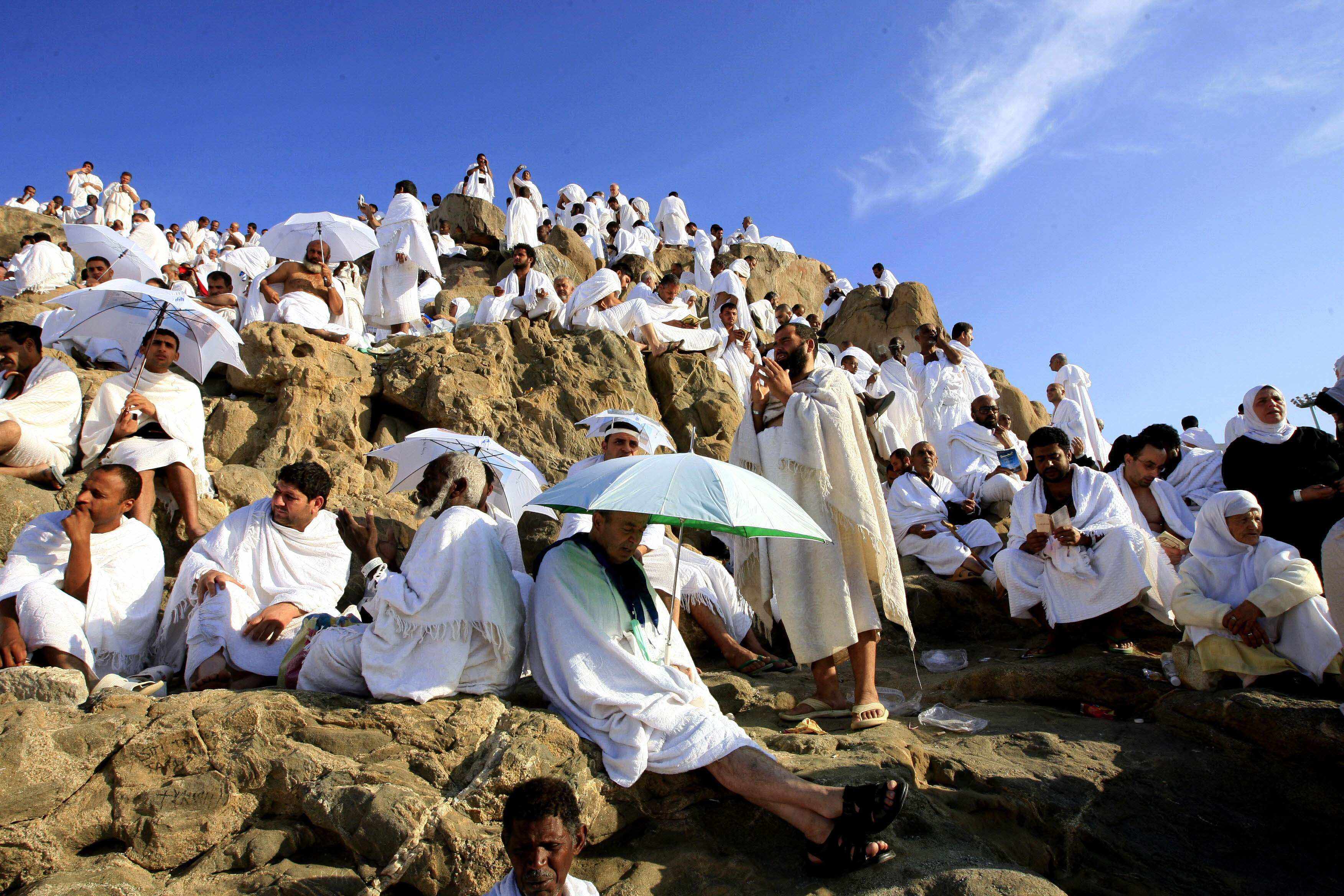
That same year, they had the opportunity to go for the pilgrimage of Hajj. A relative of theirs told them that when the day of Arafah comes, to make sincere Dua asking Allah for children. See, in my extended family, at that point there were no heirs to the family name. My paternal uncles had daughters or children, and so that made my parents more eager and hopeful towards having children. To hear from doctors that they wouldn’t ever be able to have children was heart-shattering.

Still, they had faith. Upon reaching Mount Arafah, they made Dua asking Allah to bless them with a son. As my dad explained it this morning during Suhoor (the morning meal before beginning a fast), he said that they both made dua, and then looked at each other and saw one another in tears. They began to see hope again. Their faith kept them optimistic and hopeful.

Almost a year later, I was born. And since then, they’ve had my three sisters, the youngest of which was born 11 years after me, Masha Allah.

The reason I wanted to share this story with all of you was to share with you one of the many reasons I firmly believe that my Dua will be answered if I ask Allah for something with sincerity, hope, and patience. Dua is incredibly powerful, and if we rely on Allah and ask Him for what we seek, knowing that He can make what appears impossible become a reality (the doctors said it was impossible, but what is possible and impossible is with Allah, Alone), there are no limits to how much we can achieve in this life and the Next. There are certain things that will never happen, which He has laid out in the Quran, such as us getting a second chance at making up for not worshipping Him, after we’ve passed away. But, other than what He has laid out as impossible, everything else is possible. So, don’t stop dreaming, don’t stop making Dua, and never lose hope in Him.

Another reason for sharing this was to perhaps give all of you hope. If you find that there is something your heart seeks (that is halal), make Dua for it today. Make so much Dua for these things, that your mouth remains wet with constantly remembering Him and seeking His Provision, Protection, Mercy, and Guidance. And KNOW for a fact that He will answer your Dua.

I pray that Allah accepts all of your fasts today, and that He rewards you for a fast if you sincerely intended to fast but were unable to for whatever valid reason. I pray that He accepts your Dua and soon grants you what you seek in this life and the Next. I pray that He guides your heart and mind towards desiring what pleases Him, and towards feeling a dislike towards what displeases Him. I pray that you all find happiness, and that even if it isn’t in the way others hoped for it to be for you, that you achieve all the greatness and success you are deserving of in this life and the Next. Ameen.

And today, I will pray for myself as well, that I find the heights of success I am aspiring towards in my businesses and projects, that I become stronger as a Muslim and man, that I reach the pinnacle of my personal best in matters of health and fitness, and finally, the Dua that is amongst the closest to my heart and is repeated just the same every day, that I marry the woman of my Dua one day soon, insha Allah.

Please remember me in your Dua today, and in the days to come. Jazakallahu khairun.

For more information about this blessed day, check out: The Virtues and Benefits of the Day of Arafah

The Virtues and Benefits of the Day of Arafah

The Virtues and Benefits of the Day of Arafah 2150 1376 Nadir Keval

This is taken from Islam QA, and has been edited linguistically to better fit the readers of this site.

Sheikh Muhammad Salih Al-Munajjid was asked, “What are the virtues of the Day of Arafah?” This is what he said:

Praise be to Allah.

  1. It is the day on which the religion was perfected and Allah’s Favour was completed. In Al-Saheehayn, it was reported from Umar ibn al-Khattab (may Allah be pleased with him) that a Jewish man said to him, “O Ameer al-Mu’mineen (Leader of the Believers), there is an Ayah (Quranic verse) in your Book (the Quran) which you recite. If it had come to us Jews, we would have taken that day as an Eid (festival).” Umar asked, “Which Ayah?” He responded, quoting the verse of the Quran (5:3 – interpretation of the meaning), “This day I have perfected your religion for you, completed My Favour upon you, and have chosen for you Islam as your religion.” Umar said, “We know which day and in which place that was revealed to the Prophet (SAW). It was when he was standing in Arafah on a Friday.”
  2. It is a day of Eid for the people who are in that place. The Prophet (SAW) said, “Yawm Arafah (the Day of Arafah), Yawm al-Nahr (the Day of Sacrifice), and Ayyaam al-Tashreeq (the three days following Yawm al-Nahr) are Eid for us, the people of Islam. These are days of eating and drinking.” This was narrated by the authors of al-Sunan. It was reported that Umar ibn al-Khattab said, “It (i.e. the Ayah, ‘This day I have perfected…’) was revealed on a Friday, the Day of Arafah, both of which, praise be to Allah, are Eids for us.”
  3. It is a day by which Allah has sworn an oath. The Almighty would not swear by anything except that which is mighty. Yawm Arafah is the “witnessed day” mentioned in the Ayah “By the witnessing day (Friday) and by the witnessed day (the Day of Arafah).” (Quran 85:3). It was reported from Abu Hurairah (may Allah be pleased with him) that the Prophet (SAW) said, “The promised day is the Day of Resurrection, the witnessed day is the Day of Arafah, and the witnessing day is Friday.” (Narrated by at-Tirmidhi and classed as Saheeh (valid/true) by al-Albaani. It is also the “odd” (i.e. odd-numbered) by which Allah swore when He said, “And by the even and the odd.” (Quran 89:3). Ibn Abbas said, “The even is the Day of al-Adhaa (i.e. the 10th day of the Islamic month of Dhul-Hijjah) and the odd is the Day of Arafah (i.e. the 9th of Dhul-Hijjah). This is also the view of Ikrimah and al-Dahhaak.
  4. Fasting on this day is an expiation for two years. It was reported from Abu Qataadah (may Allah be pleased with him) that the Messenger of Allah (SAW) was asked about fasting on the Day of Arafah. He said, “It expiates the sins of the previous year and of the coming year,” (Narrated by Muslim). This fasting is Mustahab (recommended and beneficial, but not obligatory) for those who are not on Hajj (pilgrimage). In the case of the one who is on Hajj, it is not Sunnah for him to fast on the Day of Arafah, because the Prophet (SAW) did not fast on this day in Arafah. It was narrated that he forbade fasting on the Day of Arafah while being in Arafah.
  5. It is the day on which Allah took the covenant from the progeny of Adam (may Allah has mercy on him). It was reported that Ibn Abbas (may Allah be pleased with him) said: The Messenger of Allah (SAW) said, “Allah took the covenant from the loins of Adam in Na’maan (i.e. present day Arafah). He brought forth from his loins all his offspring and spread them before Him, and then He addressed them saying: Am I not your Lord? They said, ‘Yes, we testify.’ ‘Lest you should say on the Day of Resurrection: ‘Verily, we have been unaware of this.’ Or lest you should say: ‘It was only our fathers aforetime who took others as partners in worship along with Allah, and we were (merely their) descendants after them; will You then destroy us because of the deeds of men who practiced Al-Baatil (i.e. polytheism and committing crimes and sins, invoking and worshipping others besides Allah)?’ (Quran 7:172-173 – interpretation of the meaning).” Narrated by Ahmad and classed as Saheeh by al-Albaani. And there is no greater day than this and no greater covenant than this.
  6. It is the day of forgiveness of sins, freedom from the Fire, and pride in the people who are there. In Saheeh Muslim, it was narrated from Aisha (may Allah be pleased with her) that the Prophet (SAW) said, “There is no day on which Allah frees more people from the Fire than the Day of Arafah. He comes close and expresses His Pride to the angels, saying, ‘What do these people want?’” It was reported from Ibn Umar that the Prophet (SAW) said, “Allah expresses His Pride to His angels at the time of Isha (the fifth daily, obligatory prayer) on the Day of Arafah, about the people of Arafah. He says, ‘Look at My slaves who have come unkempt and dusty.’” (Narrated by Ahmad and classed as Saheeh by al-Albaani)

And Allah knows best.

Be Selfish, But Wise

Be Selfish, But Wise 1024 768 Nadir Keval

To be selfish is one of those traits we’ve learned to be negative since we were children. Remember hearing grown-ups say, “We have to share,” when all you really wanted to do was keep things to yourself? That was definitely a great piece of advice, but too much of anything runs the risk of being harmful. Because of this and similar reminders growing up, many of us have grown to put so much focus on the opinions of others and on putting others first.

Sounds harmless, but this can actually eat away at you fulfilling the dreams you’ve set for yourself, and in you reaching your greatest potential. It’s true that in Islam we are taught to consider others and want for our brothers what we would want for ourselves, but there are limitations to this because if we don’t secure ourselves, we can’t be our best for those we want to help and support. It’s like the question of whom you would help first if you were sitting on a plane beside an elderly person and a child, while the plane was falling towards a crash. Some would feel this is a dilemma of which of those two lives are more valuable. The correct answer to that question, however, is to first help yourself so that you can have the strength and ability to help both the elderly and child.

Balancing Giving Back

“Your body has a right over you, your eye has a right over you, your wife has a right over you, and your visitor has a right over you.” – Prophet Muhammad (SAW)

Personally, as I’ve strived towards helping as many people as possible with my life and time, I’ve struggled in finding a balance. I would often worry so much about helping others that I would end up finding myself with absolutely nothing left to keep myself going. It’s not just in monetary matters, but also in securing myself mentally and physically. I’ve always sought to follow the example of the Prophet (SAW) and his companions in how to help people, to the best of abilities. I remember once reading that the Prophet Muhammad (SAW) was so generous that it was as though he didn’t fear poverty. So, I strive towards being like that, not only in giving monetary charity, but also in helping people in any way I can. Truthfully though, it often leaves me drained at the end of the interactions.

Don’t get me wrong. I love helping people. It’s a core aspect of what makes me who I am and what makes me happy. But, the truth was indisputable. I needed to find some fuel. Unless I found a way to feed my mind, body, and soul, I would quickly drain myself of energy and would be of no use to anyone.

Soul Food

So, I began my search, first seeking out fuel for my soul, as that is what would give me strength in finding nourishment for the rest of my needs. As I ventured through my spiritual search, I found what I believe to be the answer to my concerns and the rapid drain of energy that would come from my efforts.

The solution was to make everything I do an act of worship; to find a way to make my intentions such that they would make everything I do be for the sake of Allah. I found that doing this gave me a greater motivation and discipline in doing things. I don’t get as tired, I always have energy to keep going, and I always feel good about what I do.

In addition to this, I began to strive towards purifying my thoughts and intentions. So, for example, my reason for gaining knowledge wouldn’t be solely because I believe knowledge to be a core source of power, but would also be because it is a command from Allah. This way, the more I learned, the more reward I was stacking up for the Hereafter. The same would go for when I helped others. If I strengthened the stability in my faith, it would give me ease and clarity when advising others.

The benefits of this approach, and truly running your every thought and action through the filter of Islam really helps towards finding inner-peace, happiness, and success.

Mental Massage

As I said, seeking knowledge has become one of the greatest things I have included as a part of my life. As I continuously grow in knowledge, I build wisdom with which I can advice and help others. I still have a lifetime of knowledge and wisdom to gain though, so I am in no way qualified to consider myself wise. But, my pursuit is towards never holding back from an opportunity for knowledge. More knowledge means more clarity, structure, and balance when helping others.

Physical Fuel

Something someone very important to me once said is that their reason for pursuing a healthy lifestyle and getting in shape is because, “This body and life is an Amana (loan) from Allah, so it’s my duty and responsibility to respect it and keep it in the best condition I can.” (That was paraphrased.) This was monumental in helping me shape my approach towards healthy living. If I meet someone who needs help in lifting something, or if I need to run somewhere in a state of emergency of helping someone, I would be much more helpful if I were in shape. When it comes down to helping people in any way, the better shape I’m in, the more energy I will have towards helping them. Allah has given me my body on loan, so I should use it in His service by being a benefit to humanity.

Please Him and You Will Please Others

The bottom line is simple. Please Allah, and you will end up pleasing others. Our ultimate goal is to get to Jannah (Paradise), and the beauty of Islam is that helping others AND helping our own selves counts for rewards in the Hereafter. We need to be selfish in that sense, such that we can be the best we can be to ourselves and thus the best we can be to others.

Be selfish in doing everything you can to follow the Quran and Sunnah. Be selfish in collecting as many good deeds as possible. Be selfish in doing whatever it takes to get to Jannah. Being selfish like this is beautiful, because in Islam, you can follow the Quran and Sunnah, collect as many good deeds as possible, and do whatever it takes to get into Jannah, just by being generous and helping others.

Consider it a double-dip in the Ajr (reward) Jar 🙂

Have Patience, My Friends

Have Patience, My Friends 1280 1024 Nadir Keval

Patience. Perhaps one of the greatest struggles we face as humans living in a world where we have become accustomed to instant gratification. In days of old, to travel from one place to another, people would spend months traveling by foot, horse, boat, or whatever they’d be blessed enough to have. Those same distances are now traveled within a matter of a few hours. Yet, we complain that we our flights are too long, that we don’t get the luxurious trips we “deserve”, and so on. Lovers would write to each other and sometimes have to wait weeks or months to hear from one another. Now, if we don’t get a text message back within minutes, we get upset and start to over-think and over-analyze things, leading us to break our relationships to pieces, because we were too impatient.

Being patient is incredibly important, and Allah has made that very clear in the Quran as well, where He says:

“And obey Allah and His Messenger, and do not dispute and [thus] lose courage and [then] your strength would depart; and be patient. Indeed, Allah is with the patient.” – Quran (8:46)

“But if you are patient – it is better for those who are patient.” – Quran (16:126)

“If good touches you, it distresses them; but if harm strikes you, they rejoice at it. And if you are patient and fear Allah , their plot will not harm you at all. Indeed, Allah is encompassing of what they do.” – Quran (3:120)

“Indeed, he who fears Allah and is patient, then indeed, Allah does not allow to be lost the reward of those who do good.” – Quran (12:90)

“O you who have believed, persevere and endure and remain stationed and fear Allah that you may be successful.” – Quran (3:200)

“But they never lost assurance due to what afflicted them in the cause of Allah , nor did they weaken or submit. And Allah loves the steadfast.” – Quran (3:146)

“And We will surely test you with something of fear and hunger and a loss of wealth and lives and fruits, but give good tidings to the patient, who, when disaster strikes them, say, “Indeed we belong to Allah , and indeed to Him we will return.” Those are the ones upon whom are blessings from their Lord and mercy. And it is those who are the [rightly] guided.” – Quran (2:155-157)

“And seek help through patience and prayer, and indeed, it is difficult except for the humbly submissive [to Allah]” – Quran (2:45)

“Indeed, I have rewarded them this Day for their patient endurance – that they are the attainers [of success].” – Quran (23:111)

There are so many more examples of this, but I think these paint the picture I’m trying to portray. Patience is something that comes with its benefits, including the reward of Jannah and the Companionship and Help of Allah. So, really is there really anything more enticing and inspiring than that? What more could you want? With those two benefits, you get happiness and success not only in this life, but in the Hereafter, as well! Allahu Akbar! (Allah is the Greatest!)

To Build Patience, First…

  1. Have Faith: This is the most important factor in pretty much everything we pursue, but with patience, it is even more crucial, because it lays out where we will go with the next steps. I have experienced an attempt at patient with and without patience, and to be honest, without faith, patience is not only impossible, but its absence breaks a person at the very core of their being. With faith, however, it feels no worse that a small pinch of nerves every once in a while.
  2. Be Grateful: Look at everything you have in front of you, and consider the fact that Allah has given you so much more than He could have chosen not to give you. No one can look at life, especially as a Muslim, and think that they are not blessed in one way or another. Even if you are a person who has nothing more to his name than the clothes on his back and the faith in his heart, you should consider yourself blessed, because with every moment of struggle you face, Allah is purifying your sins, based on the Hadith of the Prophet (SAW): “No fatigue, nor disease, nor sorrow, nor sadness, nor hurt, nor distress befalls a Muslim, even if it were the prick he receives from a thorn, but that Allah expiates some of his sins for that.”
  3. Be Hopeful: To know for a fact that Allah will answer your Dua (supplication) is a prerequisite to your Dua being answered. Know, without a shadow of a doubt, that will ease your struggle, and will not place on you a greater burden than what you can handle. If you feel like you can’t handle it, remind yourself that Allah knows you better than you know yourself, and that for this reason, He will certainly give you the tools you need to get through what you’re facing.
  4. Be Optimistic: As you go through your struggles and challenges, remember that Allah has a reason for all that is happening to you, and that there is a positive benefit to come from you facing what you face. He will get you through this, so don’t stress, and put on a smile because you know you have plenty of reasons to.
  5. Be Content: Try to avoid thinking of the reasons for Allah putting you through your struggle, or what lessons you have to learn from these experiences. Instead, reflect back on them after you have learned the reasons from Allah revealing them to you. Stressing about Allah’s plans and reasons won’t do you any good. Just know that He won’t let you down as long as you trust in Him.

Some practical ways to build on your patience:

  • Fasting: Personally, this has helped me to so many degrees in maintaining my patience, that I don’t have enough words to express it. It has and still does help me in my pursuits and ambitions towards becoming a better Muslim, towards my projects, towards getting married to the woman of my dreams, towards reaching my goals in health and fitness, and in finding my path in this world.
  • Doing more Nawafil (voluntary acts of worship): This will help us in training ourselves towards making Allah our greatest priority, and as a result, will increase our faith and closeness to Allah, which in turn, will increase the ease and guarantee in Allah’s response to our pleas of His Assistance and Blessings. Ask yourself, how quickly do you rush out of the masjid or away from Salah (prayer) after you have completed your Fard (mandatory) Salah? Often, we don’t take the time to pray the Sunnah or Nawafil prayers because we’re rushed to get back to work, are about to miss the beginning of a show on TV, or something like that.
  • Meditation: This is something that many scholars debate about, but the meditation I use to calm my mind and bring me back on track with my patience and focus is one that is very simple and unrelated to any religious meditation. It was actually suggested to me by a very good friend, who also said it helped in one’s focus in prayer. To do this simple meditation practice, sit down in a quiet place and close your eyes and slowly count to 10. Every time you have an external thought enter your mind, you have to start from 1 again. Do this as a way to clear your mind of clutter, and to bring yourself back to peace, so that you can calmly approach your struggle and test with patience and optimism.

This really only covers the bare basics of the topic of patience, and still, I feel as though I haven’t even reached that degree yet. But, I believe that this is a good start, and hope that with time, as I learn more, I will be able to share the lessons I experience with all of you. If any of you have some positive feedback, or some more pointers on what else can be discussed on the topic, then by all means, share away 🙂

May Allah make us all amongst the patient, so that He may be pleased with us and so that we can be amongst the dwellers of Jannah. Ameen!

Difficulty Is Sometimes Necessary

Difficulty Is Sometimes Necessary 2481 1754 Nadir Keval

Just a few thoughts I had while contemplating the lives of the Prophets and Messengers (may Allah have Mercy on them all)…

Many of us spend a lot of our time complaining about how difficult our lives are, how our duas still aren’t being answered, and so on. Often, we are reminded to think of the millions of people around the world that have it worse than us, be it because of their countries being in ruins from attacks or natural disasters, to being unable to get the necessities of life because their circumstances leave them homeless, without food or any prospects for work. This is something the Prophet (SAW) told us to think about when we find ourselves struggling in accepting the conditions of our own lives.

“Look at the people beneath you (in wealth and worldly affairs) and do not gaze the ones above you (in this matter). By this, you will not underestimate the bounty of Allah bestowed upon you.” (Narrated by Bukhari and Muslim)

Now, let’s take a moment to reflect on why we go through the difficulties we go through. Are they really necessary? Why can’t Allah just make things easier for us and remove our difficulties because we believe in Him, the Prophet (SAW), and the Last Day?

Let’s consider the best of creation and mankind: the Prophets and Messengers of Allah (may Allah have mercy on them all). Allah could have made things easy for them. He could have removed their difficulties and made the Message accepted by all with ease. But, struggles and difficulty were still imposed upon the Prophets and Messengers. They were tests of faith, and opportunities to become stronger in their conviction in the Message of Allah.

Let’s consider some examples:

  • Prophet Ibrahim (AS) was tested when his people were completely against him and tried to throw him into a pit of fire for trying to lead them away from their old ways of worship.

“Allah said, “O fire, be coolness and safety upon Abraham.” And they intended for him harm, but We made them the greatest losers.” – Quran (21:69-70)

  • Right after having the son he prayed for, Prophet Ibrahim (AS) was commanded by Allah in a dream to sacrifice his son, Ismail (AS) for the sake of Allah. They were both tested greatly in this matter, but both agreed that if this was a command from Allah, He would provide them ease through the process. And that, He did.

And when he reached with him [the age of] exertion, he said, “O my son, indeed I have seen in a dream that I [must] sacrifice you, so see what you think.” He said, “O my father, do as you are commanded. You will find me, if Allah wills, of the steadfast.”And when they had both submitted and he put him down upon his forehead, We called to him, “O Abraham, You have fulfilled the vision.” Indeed, We thus reward the doers of good. Indeed, this was the clear trial. And We ransomed him with a great sacrifice (i.e. a ram).” – Quran (37:102-107)

  • Prophet Nuh (AS) tried to teach the Message of Allah to his people for 950 years, with still resulting in only a few accepting it. Imagine the tests of patience he endured!

“And We certainly sent Noah to his people, and he remained among them a thousand years minus fifty years, and the flood seized them while they were wrongdoers.” – Quran (29:14)

  • Prophet Musa (AS) was brought to test after all the people that accepted the Message of Allah followed him to freedom. As they reached the waterfront, no revelation or guidance came from Allah for quite a while. The people began to become impatient and fearful, and asked Musa (AS) why Allah wasn’t helping them. He said, “I believe not in what is seen, but I believe in the Unseen.” Allah tested their patience until Firawn (Pharoah) was within their sight, and at that point, sent the command to Musa (AS) to split the body of water by striking his staff on the ground.
  • Prophet Muhammad (SAW) was ridiculed, insulted, had attempts made at his life, and more, yet he continued with patience. Even when things became unbearable, he sought protection and guidance from Allah. For a reference to the examples of this, read the Quran, and you’ll see them throughout the beautiful Divine Revelation.

There are so many more examples. This just scratches the surface. But what can be learned here is that difficulties were necessary for the Prophets and Messengers as well. Allah put them through these challenges to not only strengthen them in faith, but to have them act as examples for us to learn from and be humbled by. We must remember that they too were human. They were put through these struggles for a purpose.

If we face a difficulty, we must learn to be optimistic. Islam is one that is filled with reminders of reasons for hope, faith, and optimism. We are given the tools we need to accomplish this mindset and lifestyle. We simply need to do live up to the names we give ourselves: Muslims (defined as those who submit to Allah completely).

“Distance Makes the Heart Grow Fonder”

“Distance Makes the Heart Grow Fonder” 1600 1200 Nadir Keval

Most have heard this saying before, but to have it dawn on me as I was listening to the story of the life of the Prophet (SAW) was unexpected. The speaker was talking about the Divine Revelation to the Prophet (SAW) and the process in which it was sent down. He spoke of how Allah put a hold on the Message for some time after the initial Revelation. The reason for this was to make the Prophet (SAW) fall in love with the Message he was receiving.

Remember that Allah says that had He revealed the Quran to the mountains, they would have crumbled from the weight of its magnitude.

“If We had sent down this Qur’an upon a mountain, you would have seen it humbled and coming apart from fear of Allah. And these examples We present to the people that perhaps they will give thought.” – Quran (59:21)

Imagine the weight and pressure this must have placed on the Prophet (SAW). It would have been painful and difficult at first. Allah knows best. But still, when Allah put a pause on the Revelation for some time, it was to make the Prophet (SAW) fall in love with the Message, despite the physical hardship it may have caused him.

Subhanallah, with this distance that Allah had placed between the Revelations, the plan of Allah fell into place and the Prophet (SAW) became attached to the Message. Some scholars (according to the speaker I was listening to) say that this attachment became so strong that it lead to the Prophet (SAW) falling into depression and making some attempts at suicide. Subhanallah! It’s a thought we would never consider to relate to the Prophet (SAW)! But, to consider it only humbles us more, to recognize that he too was human, and was truly an example to all of Mankind. Of course, suicide is not from Islam, but the point is to see how intense this love for the Message became for the Prophet (SAW).

Despite these hardships, he loved the revelation and yearned for more. Allah then continued sending him the Message when He found that the Prophet (SAW) was ready. And from then on, it was a lifetime of commitment to the Deen, because THAT is what true love is.

“The word “love” in the Qur’an appears on over 90 places but interestingly it doesn’t define the word “love” but speaks about the very first consequence of love…”committing”, Islam talks about commitment, if you truly love, then commit, if you do not commit then your claim of love is not real.” – Sheikh Yassir Fazaga

How Does This Relate To Us?

This comes as a reminder to us all, first and foremost, that it is in the nature of humanity, in the way that Allah has created us, to yearn for something when we feel it drift away. Unfortunately, we consider this to be a weakness nowadays, when it truth, there may be a greater meaning behind it. Allah is the best of planners. This, we know.

“But they plan, and Allah plans. And Allah is the best of planners.” – Quran (8:30)

And so, He would not let us experience something without it having its purpose. If something drifts away from us, it may be because He is allowing us the opportunity to have our love or appreciation for it grow. Sometimes, he allows a drift so that we may learn what we deserve, and can appreciate what may come afterwards. Either way, we are growing, and finding our paths. Each situation is different, but it’s important to remain positive and understanding, as we do not know what struggles those involved are going through, nor do we know what stage of Allah’s Plan and Process the other person is at.

Consider it at a more basic level. When parents want their child to learn responsibility, they stop giving their child money, and tell the child that he/she must earn the money now. Because of the attachment to the comfort and sense of freedom that comes with having money, a child will feel inclined to work hard and earn his keep. But, this would only work if a child truly had an attachment to that wealth.

Break it down even further, using a non-materialistic example: when a child is in a store with his mother, he would play and run around, because he would know that his mother would be where he left her when he came back. But, as soon as the mother turns a corner, and the child returns to find his mother is no longer where he left her, he begins to panic.

This is the nature of humanity. It’s normal, and is a good thing. In the first example, the child learns a life lesson about his need to work hard in order to survive in this world. In the second example, the child learns to appreciate his mother more, and becomes more attached to her. These are examples of children, but there are many that can make this more relatable to adults. In the cases of children, the chances of them returning to their old ways is not in the least unexpected. With adults, however, it is important to learn from these experiences in order to grow.

One of the most common examples we see this quote of distance makes the heart grow fonder come into play is in the matters of the heart. With situations like these, we find that this saying holds true only in matters of true, sincere love. When a relative you truly loved passes away, every day becomes another process of strengthening that love. Whether you realize/acknowledge it or not, it happens. When you truly love someone in the romantic sense, and you go your separate ways, that love never truly dies, and you continue to think about that person, connect them to everything, and hold a small shimmer of hope that they would return, because you truly, sincerely loved them. When you really love Allah, and you find your Imaan (faith) beginning to weaken, you begin to miss Him, and fear losing your connection with Him. Even though you know that He is closer to you than your jugular vein, and that He will not leave you as long as you yearn for His Love and make an effort towards it, you still fear Him leaving you.

It’s nature. It’s how we have been created. We need to reflect on these different aspects of our lives and truly connect with and appreciate what Allah has blessed us with. We allow our fears of loss or a lacking of hope to pull us away from embracing our blessings. If you love someone, don’t be fearful of trying to make things work. Do it right by Allah and have faith that He will show you the way. If your loved one passed away, make Dua for them and ask Allah to give you strength to move forward, while never forgetting those you love. If you feel yourself drifting in your Imaan, push yourself to get back on track. Even if you feel like there is no hope, keep trying.

In every situation where distance is brought between us and what we love, take it as a blessing from Allah, learn from it, love what has been separated from you, and if possible, embrace it again (remember, nothing is impossible if done with faith and trust in Allah). If your love wasn’t true, you wouldn’t still be holding on to it. Sometimes, we don’t even realize we’re holding onto things. We naturally stopped trying to let go, because our hearts have already come to terms with the fact that these things are a part of us. It’s our minds that need convincing, and the solution to that is Tawaqqul (i.e. to make an effort while having faith and contentment with Allah’s Plans). If you are struggling with coming to terms with things, work on your Tawaqqul.

Take lessons from your experiences, appreciate what you love, and appreciate those who appreciate you. Don’t lose hope or optimism in Allah. Embrace what truly makes you happy (as long as it’s halal), and watch how Allah makes all your concerns and worries fade away. And trust Him, because He gave you this distance, perhaps so that you may become stronger in what you lacked the first time you were blessed.

Back to top